BLOG


Cover — a visual bridge between Milwaukee and San Francisco: mature autumn trees and a historic theater or home transition into the Castro Theatre and a working desk, with a continuous line or path connecting the two places. The mood should suggest return, accumulated history and renewed orientation.
Editorial image connecting autumn in Milwaukee with home and work in San Francisco.

Returning is not simply going back. It is recovering context and seeing familiar things differently.

Context & Continuity

Persistence, Preservation, Progress

Posted on October 31, 2026 by Peter Loomis


Introduction

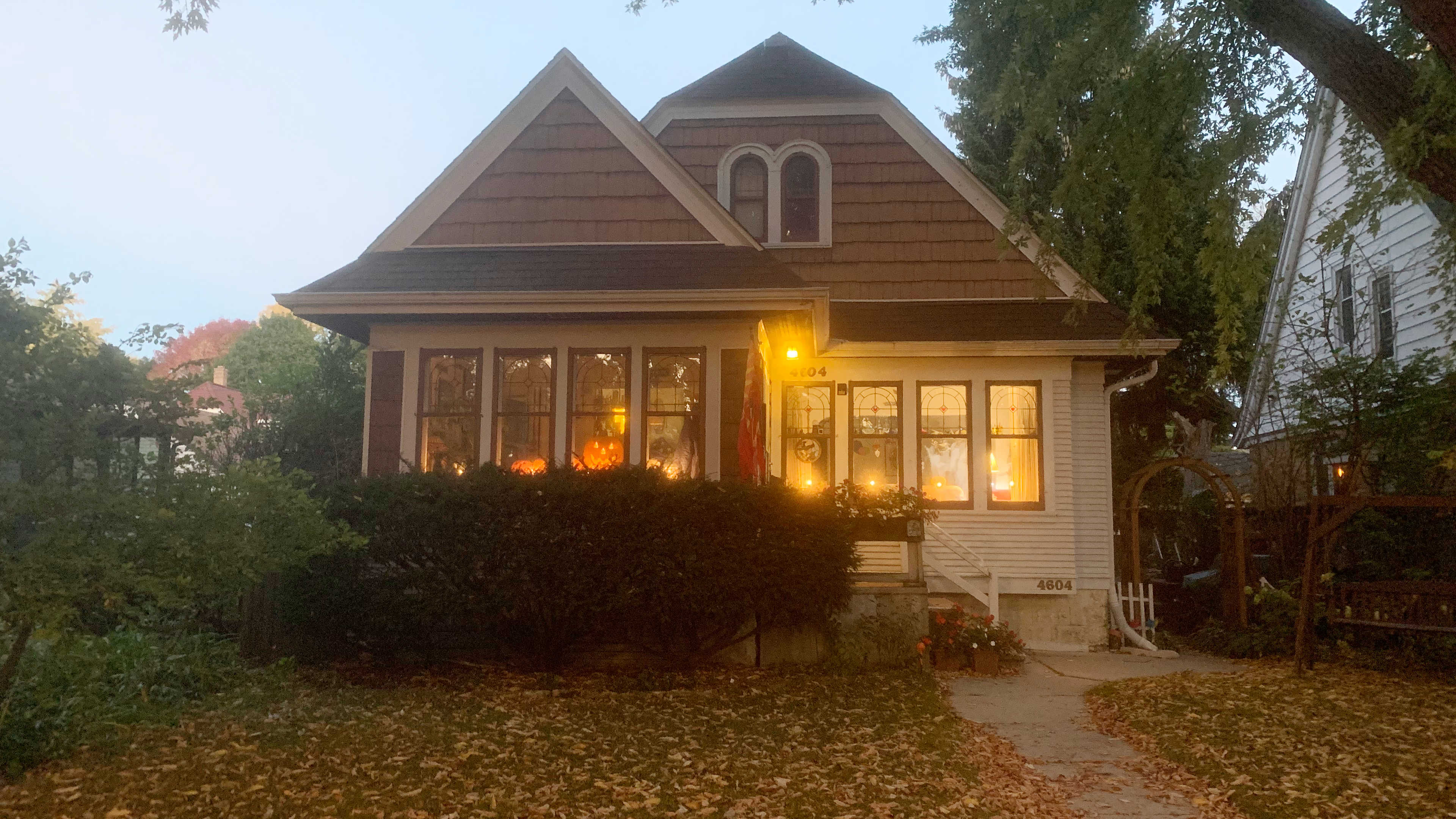
Introduction — a Milwaukee residential home at dusk and peak fall color, with a familiar path up to the house through a leaf strewn lawn.
Autumn colors in a familiar Milwaukee neighborhood.

Home sweet home.

October took me back to Milwaukee for a couple of weeks to visit. I'd been there a few months earlier, but the change of season and circumstance brought a different experience and perspective.

Each trip home is a journey. Packing up and getting things ready to leave, a day of flying both ways, settling into another place, working in a new environment, then returning to pick up where I left off. As if nothing happened.

The projects are still there, but the context, focus and concentration surrounding them doesn't always survive the interruption. So, lately I've been watching for ways to bridge the transitions, leave myself cues including an organized workspace to return to and notes to orient myself again so I can hit the ground running. A bit like the movie Memento.

Having traveled often this past year, regaining flow and getting back to regular, consistent productivity has become especially important. This month in particular, several experiences have impacted the way I think, what I value and want for myself.

1. The Beauty of Age — a triptych or layered composition of an ornate lost Milwaukee building, the restored Oriental or Downer Theatre and Mary Nohl's sculpture-covered home. An alternate, more personal concept could pair architectural details with labeled family boxes in the basement.
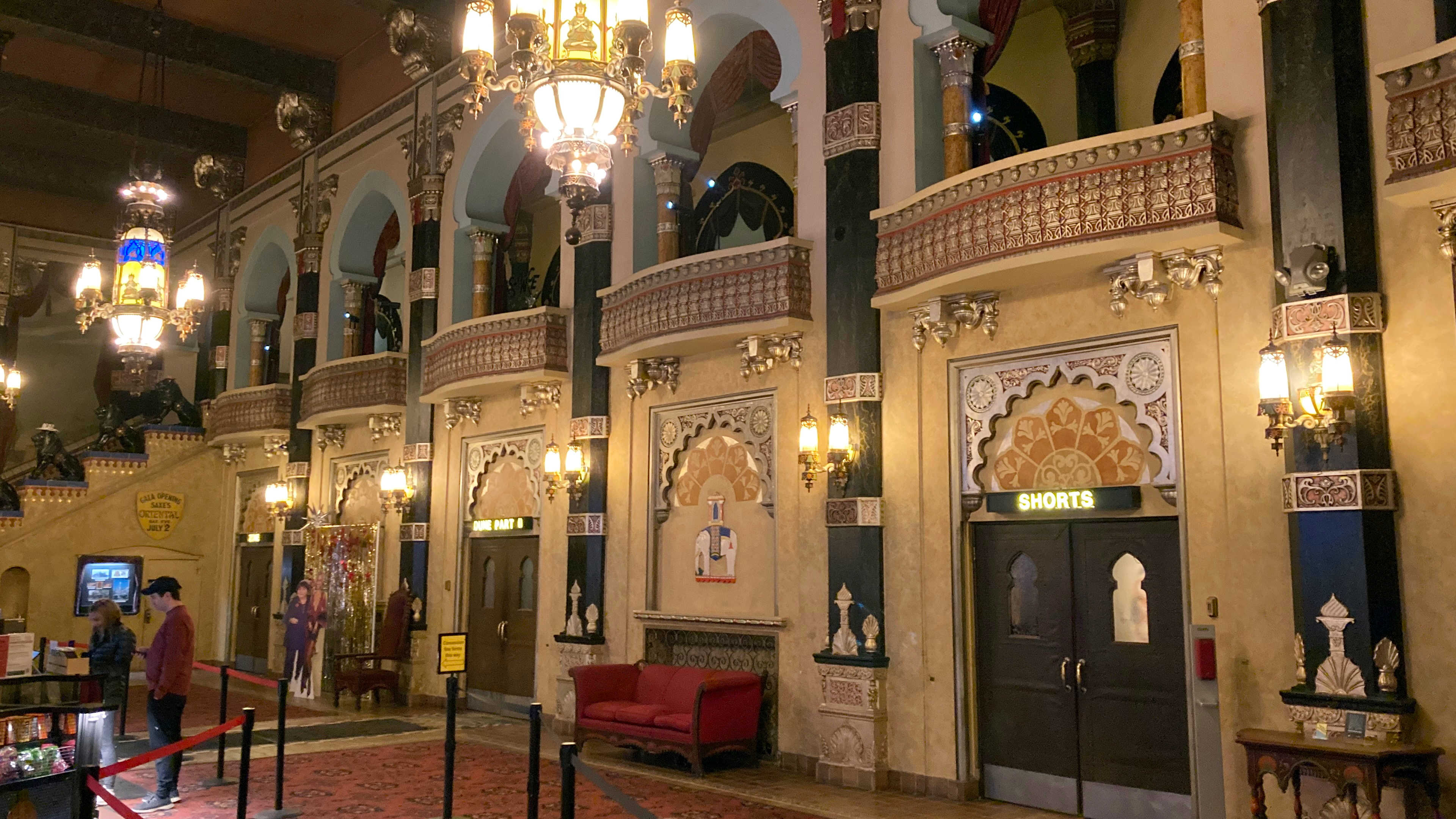
Historic Milwaukee architecture, a preserved theater and objects accumulated across generations.

The lobby of the Oriental theater in Milwaukee, taken over by Milwaukee Film who also renovated it. | Photo: Michael Barera, CC BY-SA 4.0

1. The Beauty of Age

Architecture

The first week I was back in Milwaukee, I went to several events with my mom. One was a lecture called Milwaukee Architecture: The Beauty of Age by Matt Jarosz (pictured below left), which compared the demolition of historic buildings such as the former brick train station (Milwaukee Journal/Sentinel) and renowned Plankinton Mansion (Milwaukee Journal/Sentinel), a distinctive residence with deep local roots and significance that was formerly sited on the campus of Marquette University). More modern structures have replaced them since their demolition in 1968 and 1980 respectively.

Photographs (linked above) reveal remarkable craftsmanship, an iconic clocktower, both buildings with heightened ornamentation as well as an individuality that had developed a recognizable place in the city. Of course so many structures have been demolished, often replaced by something ordinary. Cities evolve, but those older structures become part of the city's identity after generations of use.
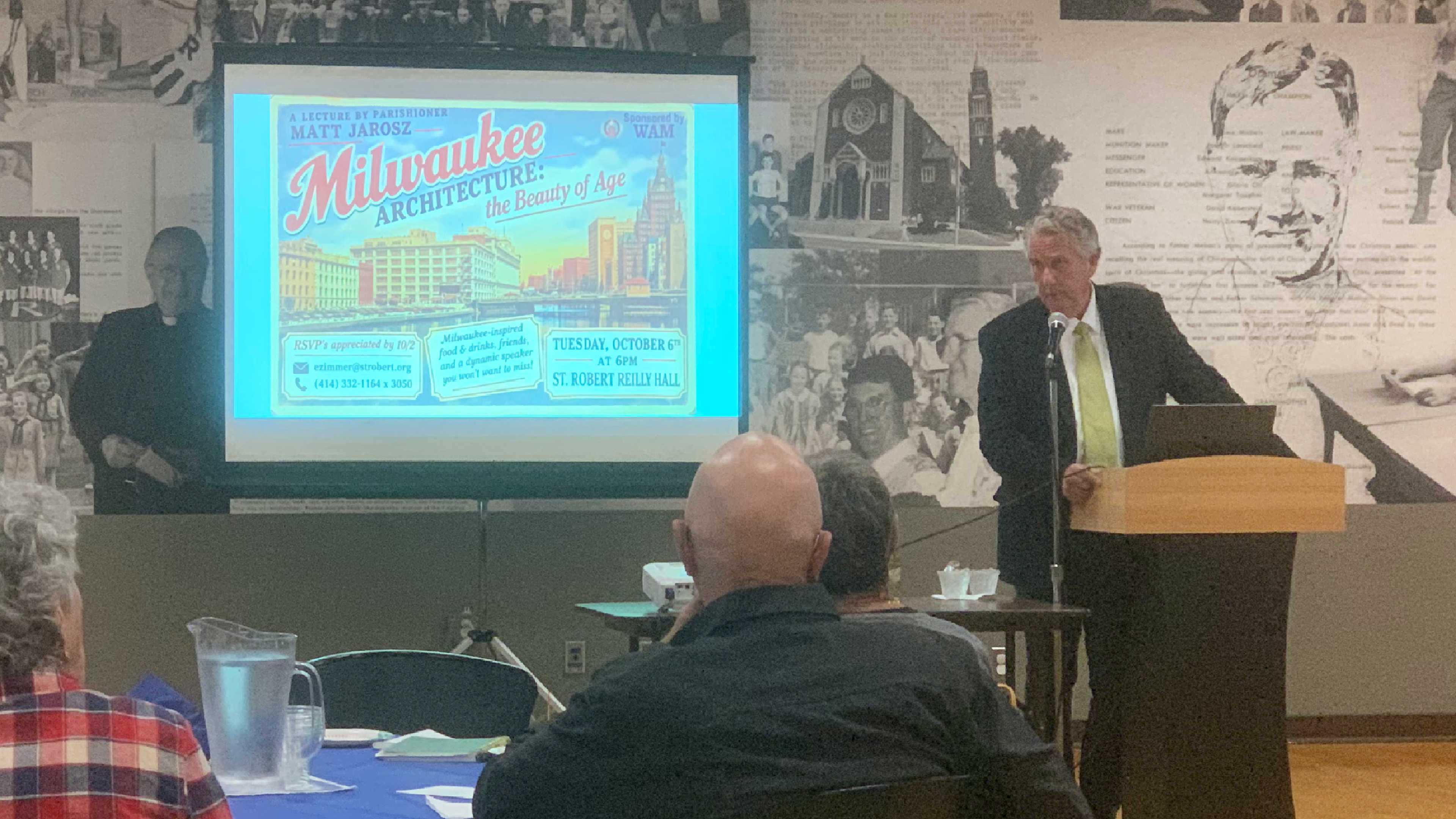
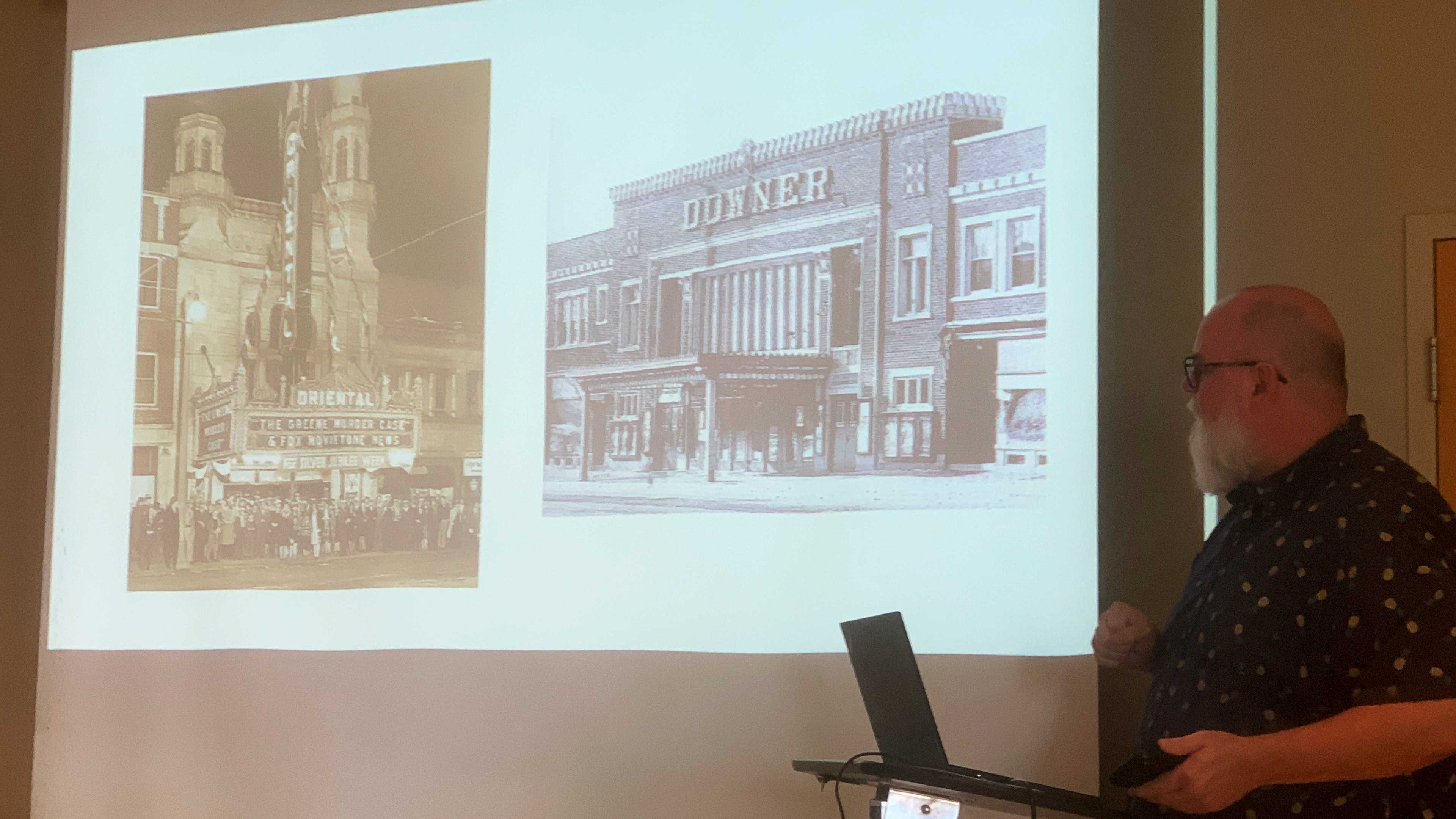
A man standing in front of a projection screen giving a lecture on Milwaukee Architecture.
A man standing in front of a projection screen with a laptop.

Milwaukee Film

We also attended a presentation by Milwaukee Film about its work in Milwaukee, especially more recently with the Downer and Oriental theaters (pictured above right). These historic cinemas have been renovated and returned to active use, with year-round programming, classic and contemporary films and member events. I loved hearing about their plans to curate experiences for these spaces. The buildings retain their character while continuing to offer fresh programming to the modern public.
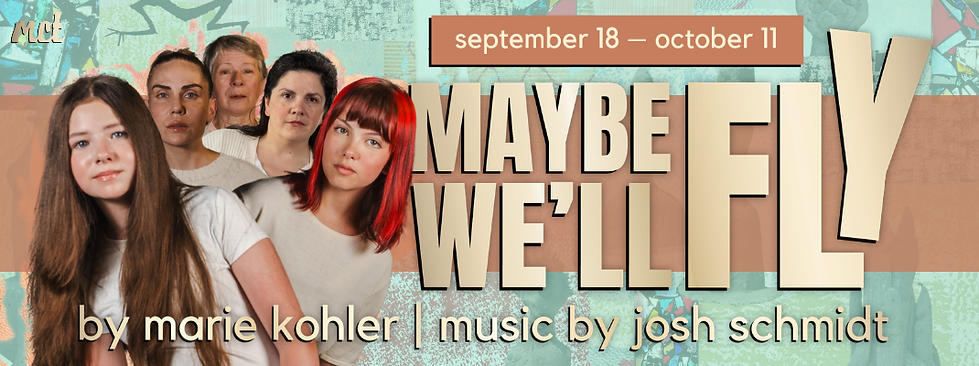

Maybe We'll Fly

The day after I arrived we went to the Milwaukee Chamber Theater to see Maybe We'll Fly, a play about a renowned local artist Mary Nohl, whose sculpture-covered "Witch's House" along Lake Michigan became a landmark for its large sculptures made of bony driftwood and natural materials. Especially haunting at night to teenagers and locals who drive down to see her yard at night, headlights illuminating the freakish scenes in the wild, sprawling property of her lakeside home. Four different actresses portrayed Mary at different ages, sharing the stage and then watching the next as her life unfolded. The older Mary remained present throughout, watching and participating as younger versions of herself moved through experiences that had shaped her.

The audience gradually acquired the context to understand the older woman who had been there all along. Childhood, adulthood and old age occupied the same space, compressing decades into a single view. By the end, the artist, her house and her work carried meaning that simply hadn't been available at the beginning. Together, it was a woman's whole life and career summarized and interpreted in a couple of hours. By the end of the play I felt that I too had dreamed with her younger self of flying and conquering dragons. The complexities of her relationships and path had unfolded with us present for those few moments.

Life in Layers

At my family's home, I've been helping to organize things all over the house. Meanwhile I've encountered boxes of belongings from childhood on through many periods of our family's life. Photos of the many lives, lived here. My brothers and sister, exchange students, collages of cousins and relatives.
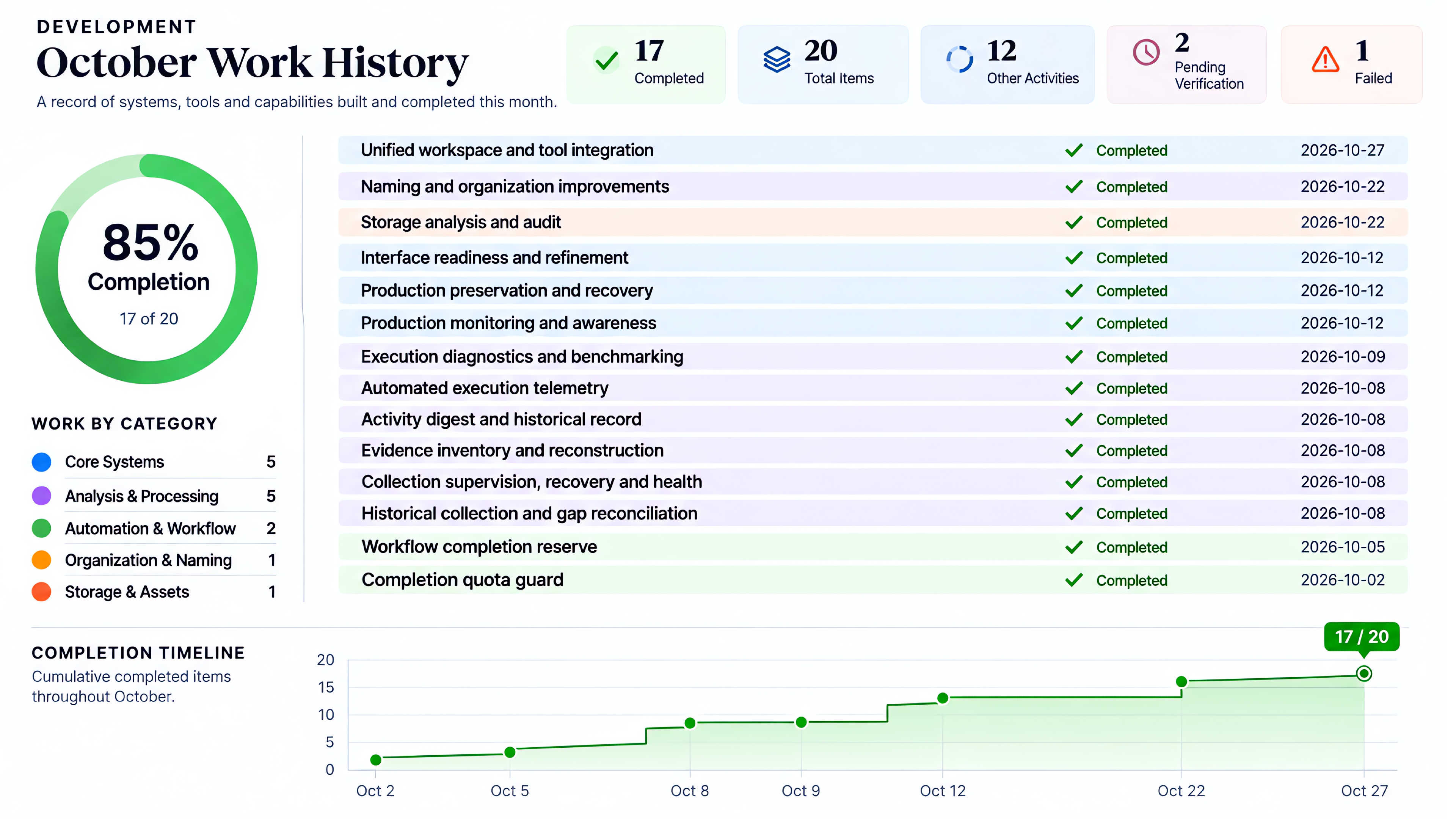

2. Continued Development — a laptop working away in a temporary Milwaukee setup while video files, camera cards and storage indicators crowd the surrounding space. A production-history timeline could run beneath it, turning scattered interruptions into a visible accumulation of completed work.
A closely cropped line drawing of an owl looking directly at the viewer.

The daily experience was fragmented. The history showed what had accumulated.

2. Continued Development

After last month, I was on a roll developing several internal projects. I arrived in Milwaukee with the intention of continuing to develop some of the autonomous systems I've been exploring over the past several months. Specifically, I wanted to test how much useful work could happen remotely, away from my usual setup, with less routine supervision.

Following on my experiments last month, I tested running local Qwen models (via LMStudio) through a Claude Code harness on my laptop, using command line integration to execute extended tasks while I was doing other things. While the experiment worked, one repository exploration took roughly 92 minutes. Other attempts running Bionic with Qwen models overnight encountered integration problems and produced erroneous overnight output. The system was busy all night without even returning usable results let alone producing much that I could confidently build upon.

Meanwhile, I wanted to shoot fresh 360-degree video at landmarks around my neighborhood. To prepare, I downloaded photos from multiple devices to clear up space for field use. Meanwhile, my harddrive was filling up. As the situation got critical, I had to start shutting down applications. By the end of the trip, I'd effectively stopped using it for local dev, exposing limitations in both the development process and my working environment.

Consequently, however, the development work got me to shift my strategy towards smaller, verifiable units, along with better activity histories and records of completed work. I needed to make actual progress not just appear active.

In addition, I was able to retroactively trace my activity because I'd started an activity tracker last month. However I hadn't connected it until the end of the month. Now, looking at October's production history, I can see that the month has actually turned out more substantial than it felt along the way.

I guess the disruption had something to do with it. Wanting to be available and knowing that I was there to visit eventually focused production even further than quota restrictions might. Even efforts to understand what the computer and AI agents were doing developed into tools for recording, preserving and managing that work. By month's end, some of that infrastructure has supported several practical utilities that I am now using regularly. The daily experience may have been full of interruptions and potential setbacks but our new activity tracking reveals what actually happened.
"Beauty lies not in the stones and gold. Beauty lies in the age."

— John Ruskin, 1849

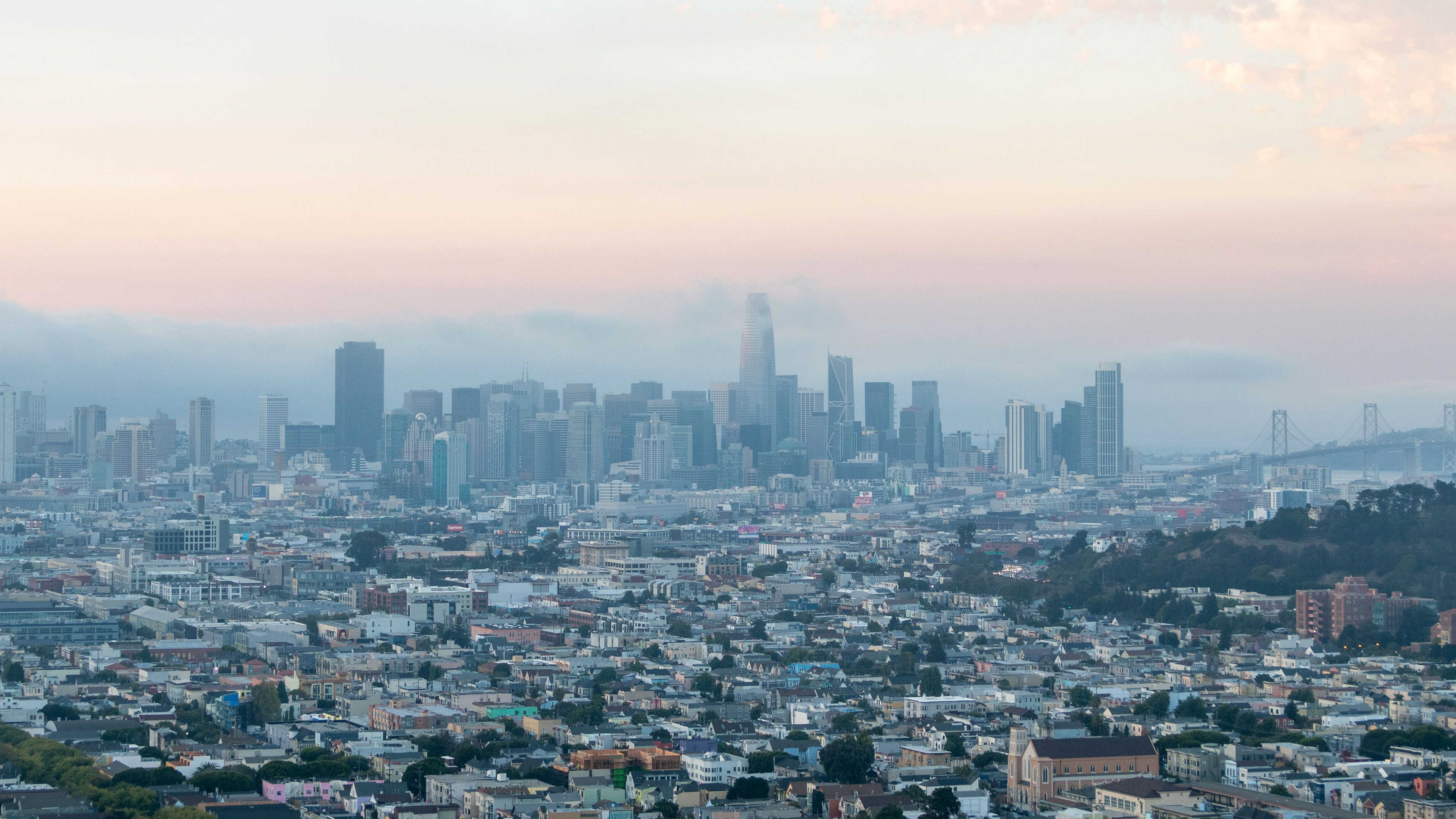
3. Return to SF — the Castro Theatre seen from the apartment or neighborhood, paired with an unpacked suitcase and a laptop storage warning. The visual should connect renewed attention to place with the practical work of re-entering an interrupted life.
A view of San Francisco from Upper Market.

The files were still there. The relationships surrounding them needed to be recovered.

3. Return to SF

Returning to San Francisco brought another shift in perspective. Having lived here for more than 25 years, its skyline, buildings and neighborhoods have become part of my sense of place. From my window I can see the Castro Theatre, another historic cinema. After Milwaukee, I found myself noticing it differently, considering what it represents.

In my studio, the immediate challenge was regaining my working context. Ideally I'd walk in, say "I'm back" and hit my stride. However in reality, I've found that the longer the interruption, the greater the divide.

My cameras were full again, my harddrive had less than 5 GB free. Between the recent video exports, newly downloaded photographs and existing files, I needed space, udeally without buying more drives. Next, I needed to get back up to speed as fast as possible.


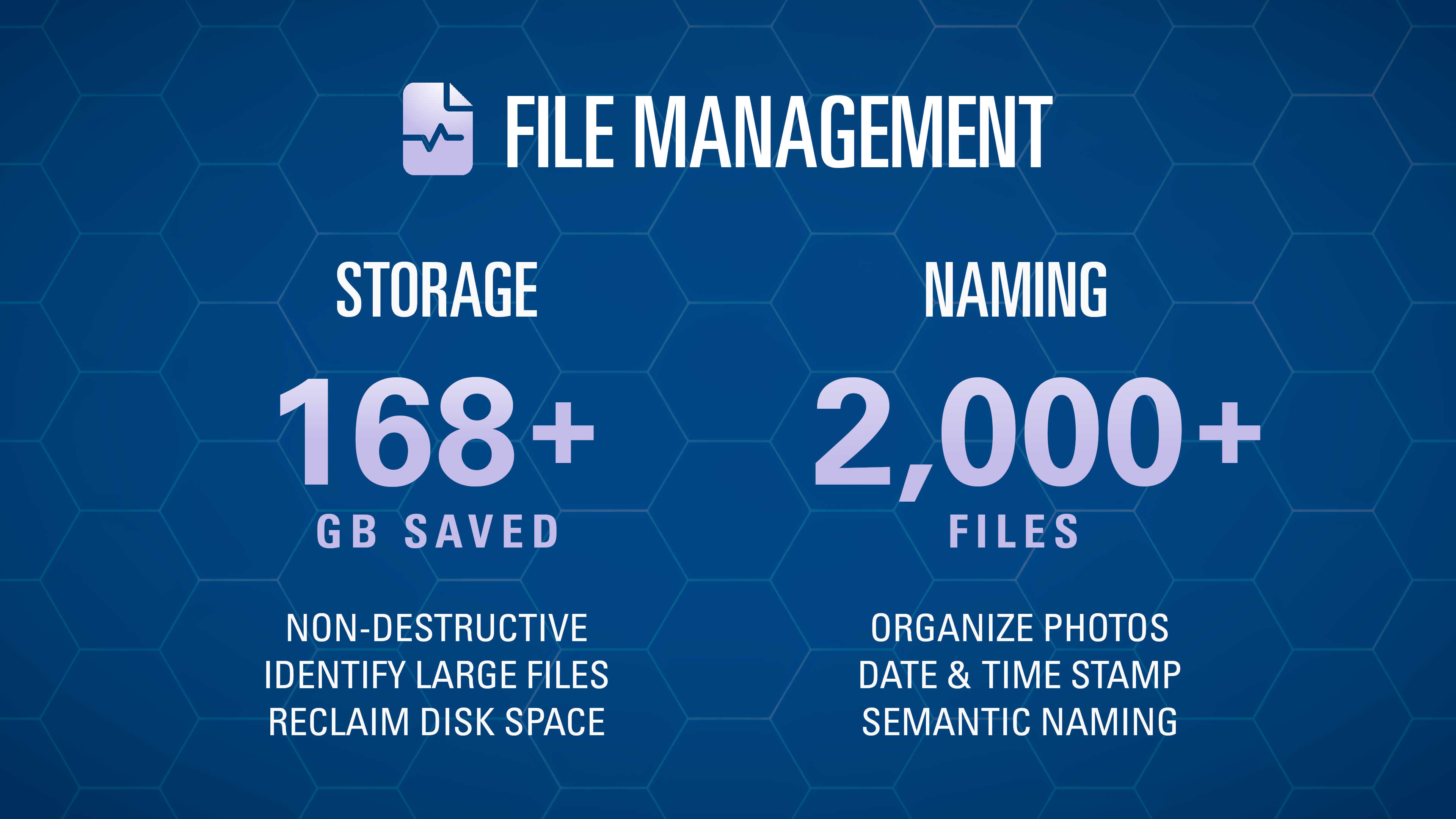
4. Rhythm & Routine — a before-and-after storage visualization moving from less than 5 GB free to approximately 173 GB, surrounded by organized folders of photographs and 360-degree footage. A quieter alternate image could show an unpacked room, journal and yoga mat as parallel forms of reset.
An infographic highlighting 168+ GB saved and over 2000+ files named.

So far I have recovered more than 168 GB and automatically renamed over 2000 files — helpful context and critical space to continue.

4. Rhythm & Routine

Unpacking and resetting my workspace helped me to regain my bearings. Physically, I put things away and can stop living out of a suitcase. Digitally, I started by reviewing photographs and footage, organizing material and giving files names that will make sense when I return to them.

I developed a new disk storage and file management utility to understand where the disk space had gone. I was able to identify duplicate photo archives, video captures and other material to quickly consolidate or remove. After the first cleanup pass, I had approximately 173 GB available, with another 50 GB of easily targeted material to offload or delete.

More than 168 GB recovered, without immediately purchasing additional storage. The utility also represented a practical outcome of the development environment I'd been building.

Yoga, meditation and journaling help with the rest of the transition, allowing me to unpack feelings, distill thoughts and establish direction. When I do those things regularly, I find I can focus deeply and get more done.

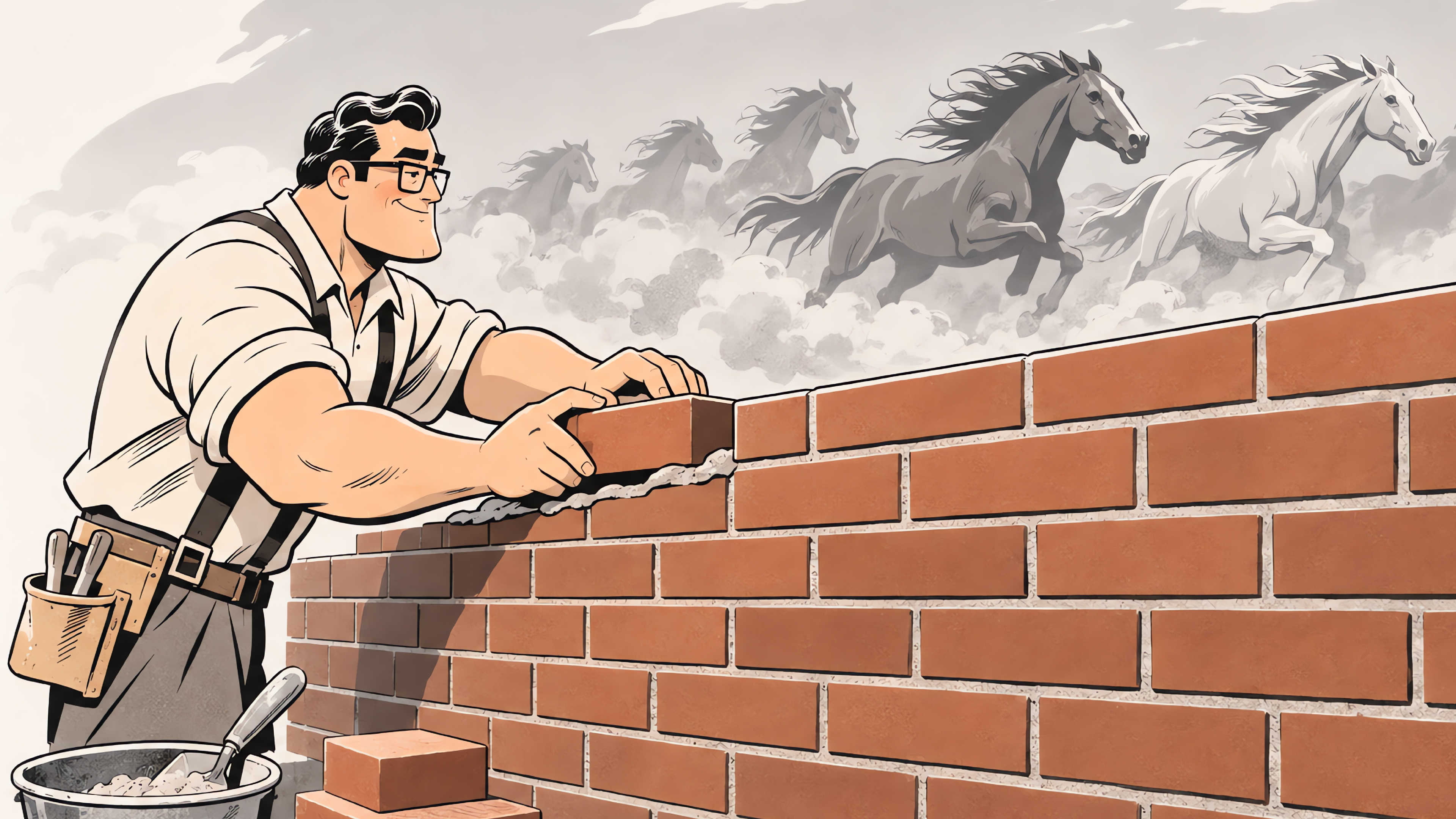
An illustrated graphic showing a man making a brick wall over a landscape with horses stampeding.

Rhythm Over Output

A friend recently asked if I wanted to challenge each other to 2x our output for a stretch of time. I responded that before I get to that stage, I wanted a steady flow of predictable progress over a long period.

I've done the maxxing. I've broken my own records and worked to hit numbers. The focus quietly shifts from quality to quantity. How many I made starts to matter more than how good each one is, or how targeted.

More recently my methodology includes working toward a sustainable rhythm where one result builds on another, the way bricks become a building. The ability to recover and refocus quickly after interruptions makes that increasingly possible by maintaining context and preventing the extra churn of having to rebuild everything from scratch each time.


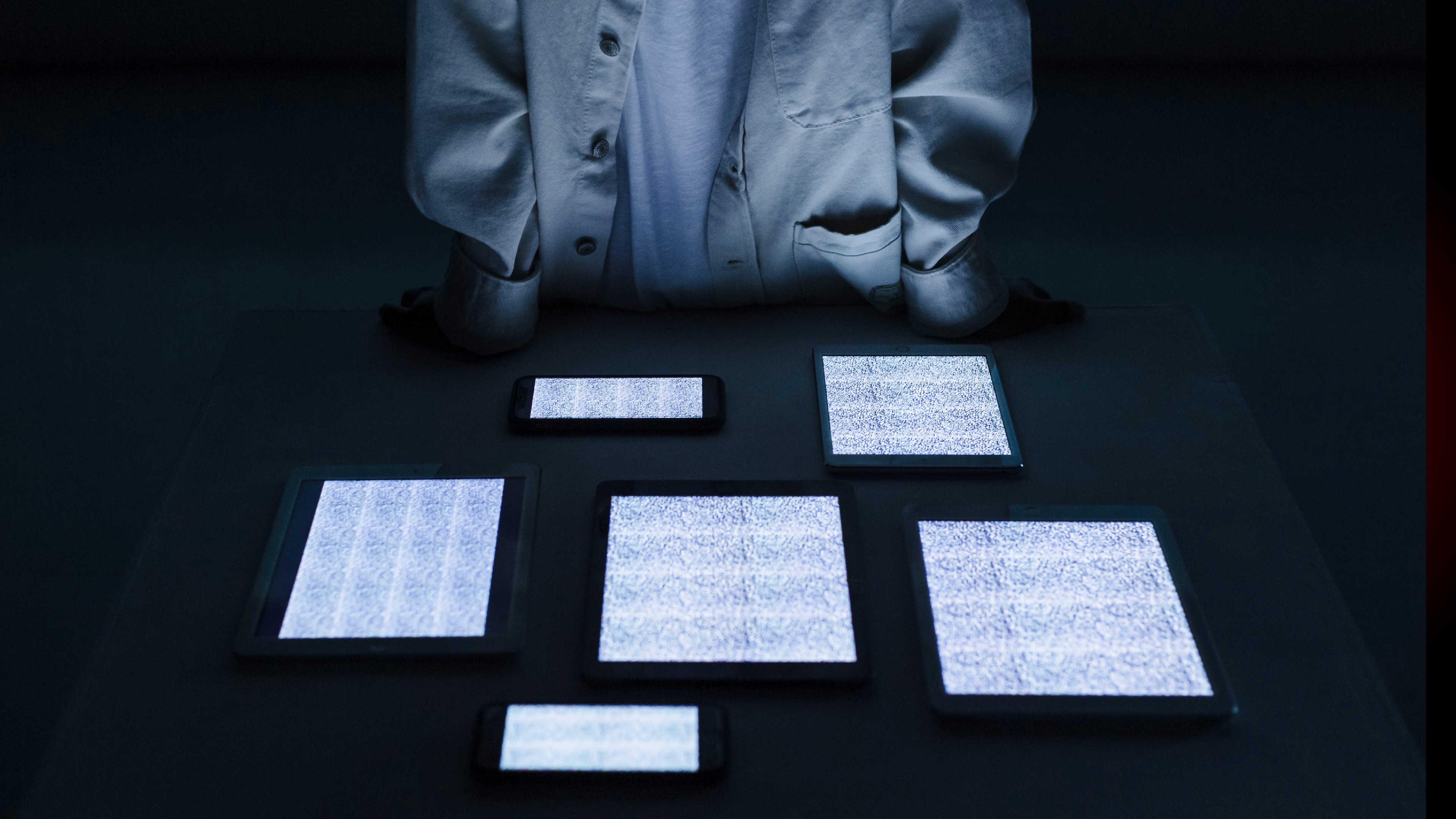
5. Digital Parallels — a spatial desktop with several displays and browser windows interrupted by a two-factor authentication path that sends the user across the room to a phone, then back through the wrong browser. The original task remains visible but its surrounding thread has fragmented.
A person in a large white coat standing in front of a table with several screens facing upwards, showing digital static on each one, which illuminates the scene.

The boundaries of organizational responsibility rarely match the boundaries of human experience.

5. Digital Parallels

I encounter smaller versions of these interruptions constantly throughout the day. As a "power user," my workspace includes multiple displays which contain many desktops, browser windows and often concurrently running, resource-intensive applications. Over time, I tend to organize and navigate my environment spatially, knowing where things are by habit.

Two factor authentication (2FA) is one of the worst culprits. Then a 2FA check interrupts something. I have to walk across the room for my phone, find the code, find the right browser tab and return before it expires. Then find where I was and try to regain momentum. Notifications vie for attention. The micro-process succeeds, but now I've lost where I was and what I was doing original before the interruption.

As a designer, I think this experience is broken. We have code autofill, trusted devices and persistent sessions, but no consistent approach to identification and KYC. Nobody owns the entire experience. Authentication and identity verification are handed off to separate systems, leaving users to navigate the transitions.

Security matters, but each service concentrates on its own interaction while the person on the other side lives through dozens daily. Confirmation links from email open in different browsers, windows shift automatically, codes expire and identity checks introduce more steps. The accumulated friction creates frustration, abandonment and lost conversion. A thirty-second interruption can disrupt hours of concentration. The boundaries of organizational responsibility rarely correspond to the boundaries of human experience.

"For me context is the key – from that comes the understanding of everything."

— Kenneth Noland

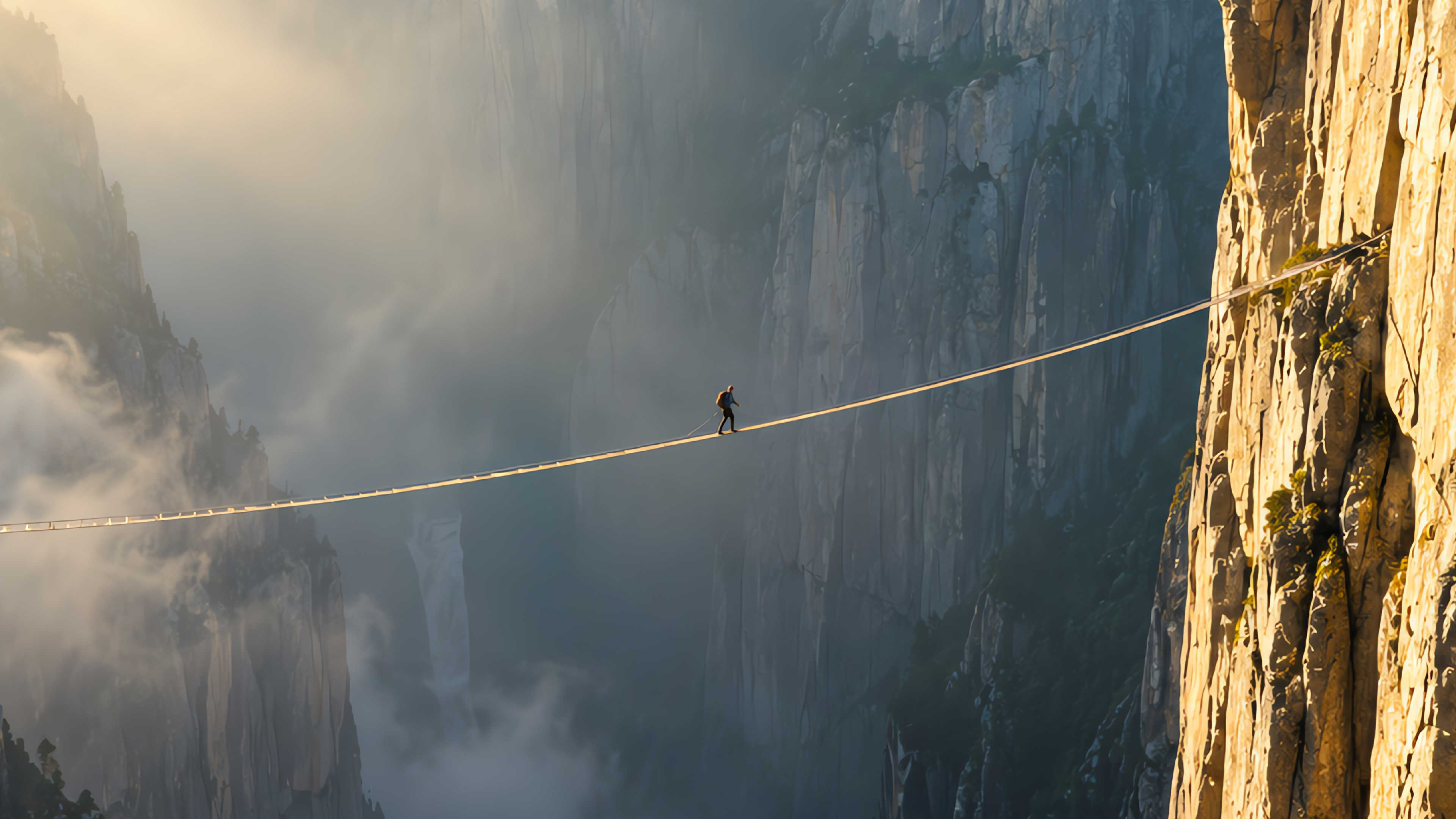
6. Designing for Continuity — a context map spanning both sides of an interruption: decisions, unresolved questions and next steps are captured before departure, then become an orientation path on return. A handoff baton or bridge can connect the two states without suggesting a total restart.
A thin bridge across a wide gap between mountains.

A useful handoff lets someone continue without retracing every step—even when that person is me.

6. Designing for Continuity

I've spent much of my career creating brands, websites and digital products, often for businesses starting from scratch. There's energy in establishing something new, but I'm increasingly interested in what happens after those initial decisions, when people have lived with something long enough to develop their own understanding of it.

Products and brands accumulate meaning through use. People learn conventions, develop habits and invest attention in understanding how things work. Redesigning an established experience means inheriting that relationship, even when it isn't visible in the interface.

I think designers and organizations need to take responsibility for a wider swathe of the experience. Consider what happens before someone arrives, what they already know, where they're sent and how they return. Guarding the user's time and focus should extend beyond the boundaries of an individual product or department.

I've been thinking about building bridges on either side of transitions. Before leaving a project, record decisions, unresolved questions and intended next steps. Context maps, summaries and orientation notes can preserve relationships that would otherwise take hours to reconstruct.

Returning requires its own consideration: reviewing what's changed, recovering relevant context and establishing a path forward. My October production history now provides that perspective on development work, bringing earlier states into view. In a different way, the Mary Nohl production allowed the audience to understand a life through the presence of its earlier stages.

A useful handoff allows someone to continue without retracing every step, even when that person is me three weeks later. Work, then stop. But preparing to come back is part of it.


7. Stewardship & Integrity — an active historic theater, the family home and a curated digital archive arranged as three forms of stewardship. Each retains what gives it character while making deliberate room for continued use and change.
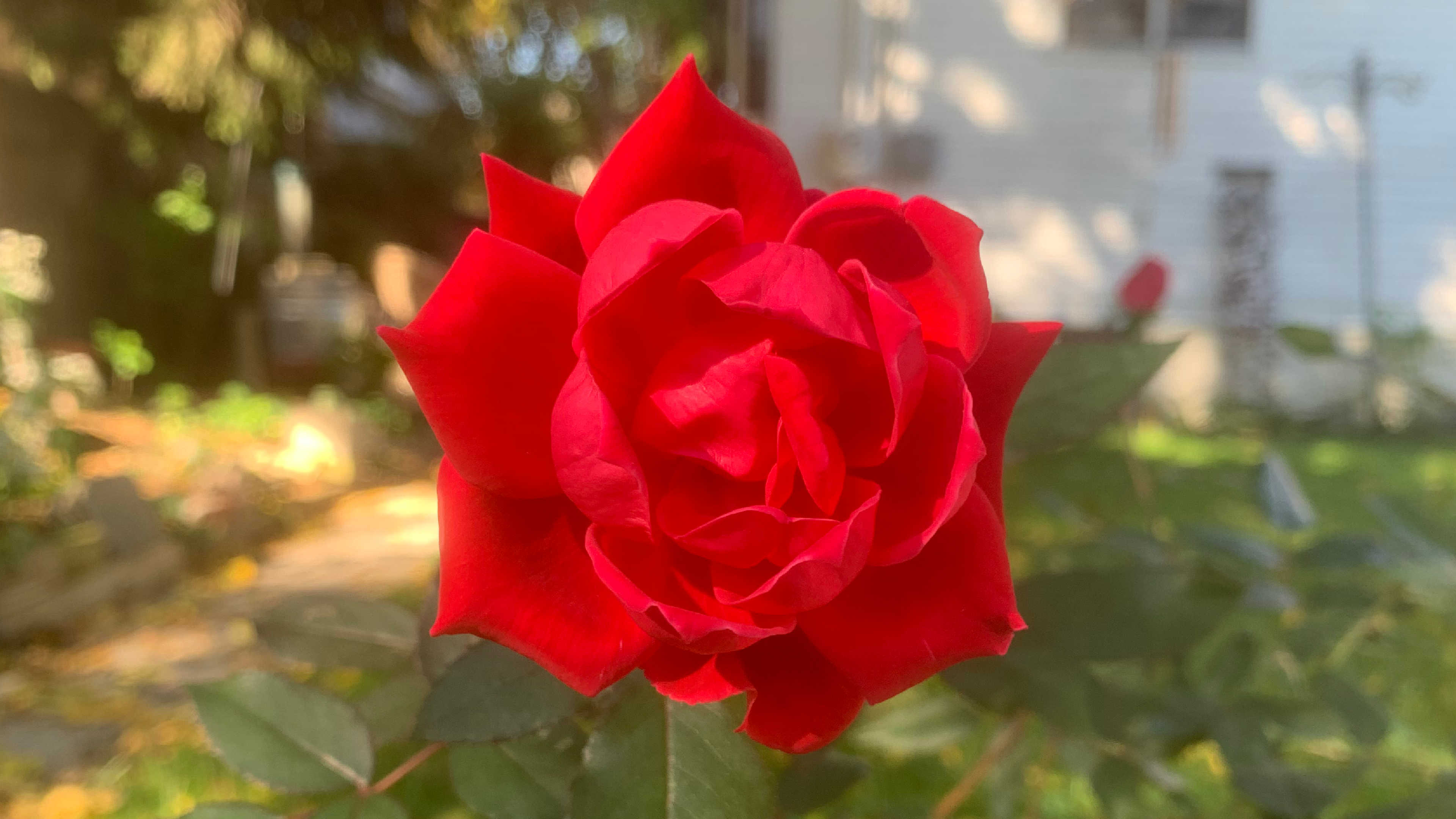
A bright red rose over a green lawn with a white house in the background.

My mom has been tending to a rose in our backyard that my dad used to maintain. It had several blooms since earlier this summer.

7. Stewardship & Integrity

The Milwaukee Film presentation stayed with me because it showed how established places can keep developing. Old theaters retain their character and usefulness to the public through active programming and continued maintenance. By staying engaged, people can still experience the history and craftsmanship for years to come.

I've spent decades building brands, products and businesses, and seeing something sustain itself over generations carries a different weight.

PERSONE has been operational now for more than 25 years, through changing technologies, clients and circumstances. Work is changing and I wonder what the next phase will look like.

Family offers another version of stewardship. Sorting through decades of belongings in the family house means deciding what stays and what goes. Similarly I making decisions to curate designs and digital archives all the time.

Preserving everything is impossible and would eventually make the collections impossible to use. But some material absolutely deserves care and special treatment. Obvious duplicates or obsolete things can go quickly and easily. It is a delicate balance between recognizing what carries meaning and what has outlived its usefulness.

That applies to design conventions and brands too. Familiarity has value when it serves people, but it shouldn't protect an ineffective approach from being replaced. A substantial renovation, new identity or entirely different interaction may be exactly what's needed. Integrity comes from understanding what gives something its character while remaining willing to change what no longer serves it.


Conclusion — the older Mary Nohl figure standing within layered scenes of childhood, adulthood, house and artwork, echoed by Milwaukee and San Francisco landmarks in the distance. The composition should convey earlier stages remaining present inside what comes next.
Earlier stages of a life and creative practice remaining visible within the present.

What lasts is not static. It gathers meaning while continuing to change.

Conclusion

I keep thinking about layers of context like a form of scaffolding between thoughts and ideas, locating me in space and time. Creating bridges on each side. Helping me crystallize everything I've accomplished and learned. On the other side, I want a generous landing strip with TLDR reports and relevant notes to help me reorient when I come back, minutes, days or years later.

The longer I am in business the more I find myself working with older systems and archives. Working between projects, even teams and companies or larger organizations, some form of chronological and often version-based naming and sorting has been essential for maintaining some form of intuitive order, with recency hinting at relevance and contextual scaffolding based on good semantics, intuitive information architecture and universal navigation systems.

I returned to Milwaukee having been there just months before, yet I came away tuned into different things. I started with momentum on autonomous production systems, intelligence allocations, harness and model benchmarks and testing. But as time went on there, my attention shifted. Time was different, presence was evaluated differently. I tuned back into our family house and its multiple layers, the many lives that it has supported and helped to grow. And since I'm there and I'm seeing things differently I have been helping to curate and clear. Now that I'm back in San Francisco again, I'm looking at familiar relationships, landmarks and unfinished projects with a renewed appreciation for what it takes to create something that lasts.

Work continues evolving. Stay tuned for more. Amidst the many new frontiers, we continue exploring, researching, testing, developing and delivering innovative solutions.

Until the next time, here's to opportunity and being open to new perspectives.

Happy Halloween! 🎃

A headless horseman on a black steed with a flaming pumpkin head.


New Project?

Planning a new creative project and need expert support? We can help. Contact us today!


Stay Connected

Follow us on Facebook, Instagram, LinkedIn, X and YouTube for more design content and inspiration! Subscribe to our mailing list for our email newsletter with periodic updates